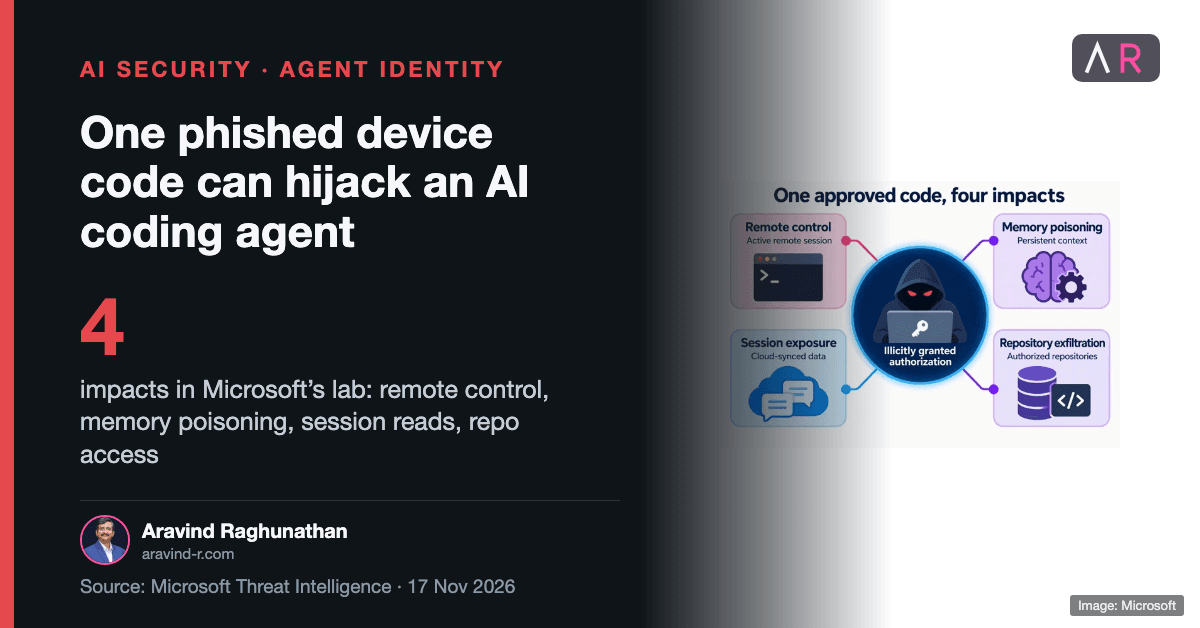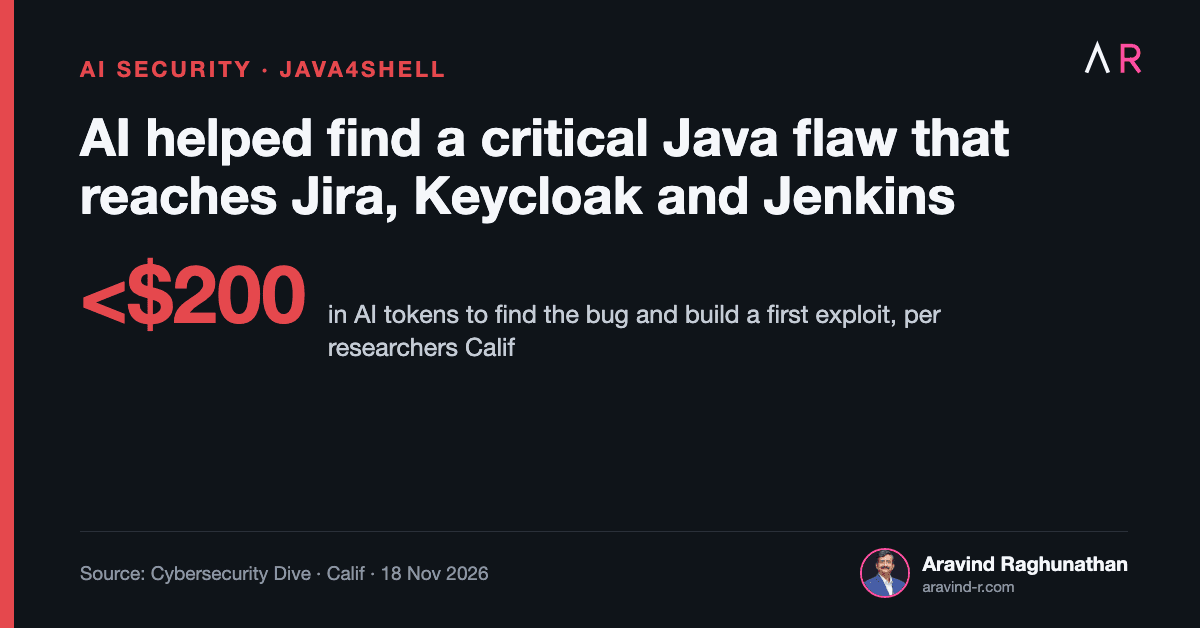
A memory-corruption bug in OpenJDK, the most widely used Java runtime, can give an unauthenticated attacker remote code execution in Jira, Confluence, Keycloak, Jenkins and other everyday enterprise software. The researchers who found it say AI did most of the heavy lifting, and that the AI bill came to under $200.
The flaw is tracked as CVE-2026-114938 and has been named Java4Shell. It scores 9.2 out of 10 (critical) under CVSS 4.0. Oracle has shipped a fix in new OpenJDK releases, and CISA has told organisations to patch immediately.
What is broken
Base64 is the everyday way of turning binary data into text. It shows up in authentication protocols, file uploads and network messages. To decode it faster, OpenJDK uses hand-tuned x86-64 CPU instructions that handle many bytes at once. Security firm Calif found a bug in that optimised code: malformed input can overwrite neighbouring memory. With careful work, an attacker can read sensitive memory in the style of Heartbleed or go on to remote code execution.
The trigger input is tiny: 64 "A" characters followed by a single "=" (128 on older OpenJDK 17).
Calif says it demonstrated pre-authentication remote code execution, in default configurations, in:
- Keycloak
- Atlassian Jira and Confluence
- JFrog Artifactory
- Jenkins
- PingFederate
It also showed post-authentication RCE in Apache Kafka, Apache Solr, Elasticsearch, Gerrit and Spinnaker. Calif says both lists are incomplete.
The AI part
Calif used AI to find the bug and to build the exploits. According to the firm, one researcher found the vulnerability in about an hour and had a first working exploit two hours later, for less than $200 in tokens. The team built the pipelines and strategy up front, pointed AI agents at them, and says most of the later exploit chains were assembled "almost autonomously".
This is Calif's second big disclosure in roughly a month. It and Google's Wiz division separately used AI to find two critical flaws in PHP before this. Malwarebytes' Chris Fistonich told Cybersecurity Dive this is "very likely to be the new normal". His point was that patching mostly runs in monthly cycles, and those cycles were not built for critical bugs arriving this fast.
How worried to be
There is no universal exploit. How Base64 is used varies from one application to the next, so each target needs its own work. Calif and independent researchers both rate it hard to weaponise. That buys you some time, but you still need to patch.
What to do this week
- Inventory where OpenJDK runs, including inside vendor appliances and containers, not just your own builds.
- Patch internet-facing identity, collaboration and CI/CD systems first: Keycloak, PingFederate, Jira, Confluence, Jenkins, Artifactory.
- Ask your vendors when their bundled Java runtimes will be updated, and get a date.
- Revisit your patch SLA for critical bugs. If AI keeps cutting discovery from months to hours, a 30-day window for critical internet-facing flaws starts to look like a choice to stay exposed.
Calif ends with a fair point. The Base64 optimisation helps a handful of applications that decode huge volumes of data, yet every Java deployment carries the risk. It's a good argument for stripping out features you never use.