The ticketless future: what ten engineering leaders learned deploying AI
At an Atlassian roundtable, leaders from fintech, retail, automotive, and jewellery retail described what AI actually exposed inside their organisations — broken process, unclear ownership, and why a silent AI blind spot is worse than a bad decision.
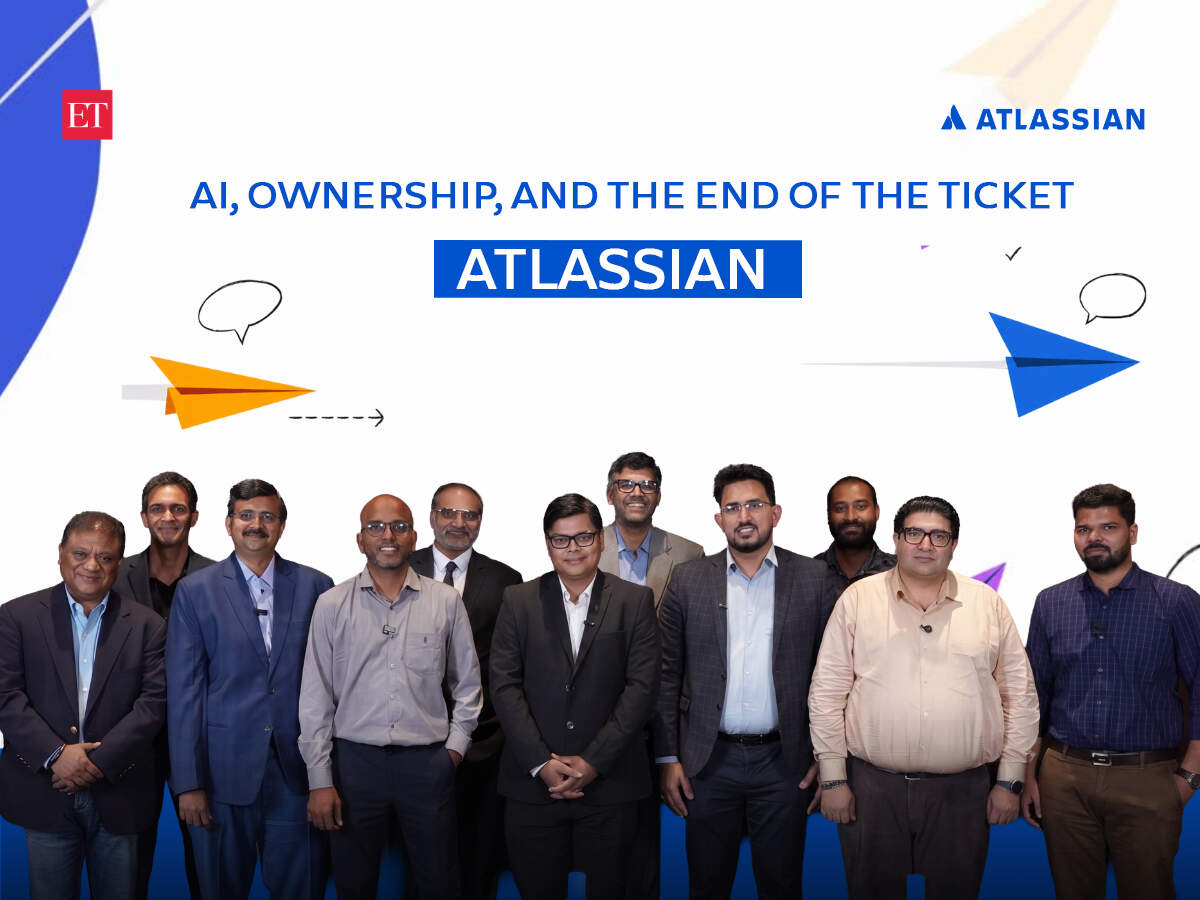
On June 12, Atlassian brought together technology and business leaders across fintech, retail, automotive software, fashion, lending, food delivery, and industrial safety at a roundtable titled "The Ticketless Future Is Here. Are You Ready?" Underneath the provocation was a simpler question: are organisations willing to look honestly at how they actually work before handing decisions to a machine.
The 95% problem
The first candid admission came from Aravind Raghunathan, Head of AI at Murugappa Group. His company had deployed an AI coaching tool for operational agents — a system that surfaced insights, recommended next actions, nudged people toward better decisions. It worked technically. Almost nobody used it.
The investigation that followed found the organisation had been running for years on informal knowledge and unspoken assumptions. "Good" meant something different in every department. Documentation existed on paper, not in practice. "We thought the process was always followed," Raghunathan said. "We thought there was a proper repository being maintained by the team, but that never happened on the ground."
AI didn't create that problem. It made visible what had always been broken.
Abhinav Tiwari from ONDC pointed to a harder version of the same issue: unclear ownership. Fragmented knowledge can be documented. Inconsistent process can be improved. But when an engineer leaves, what walks out isn't just their code — it's the reasoning behind every architectural decision they made. "What will be missed is why he chose that architecture over another. That's where the ownership problem comes in," he said.
Defining the boundaries AI operates inside
Piyush Garg of Jubilant FoodWorks described AI monitoring store performance in real time on high-stakes sale days, generating dynamic interventions — discount triggers, menu changes — when a store looks likely to miss its target. The system works. The complication is deciding what it's allowed to do.
"Wherever three things are involved — the customer, your revenue, and your brand perception — you need to define guardrails," Garg said. "AI has to work within those boundaries only." The business had never needed to be that explicit about its own boundaries until AI forced the question.
Sourav Dasgupta of Allcargo Global took a different route: instead of one high-visibility AI project, giving every employee basic AI capability, starting with clearer emails and sharper presentations. One employee's standout presentation set off a wave of imitation across the organisation. "It builds healthy competition and it builds a culture. And it tells you, 'we can do it,'" he said.
Vivek Iyer of Atlassian's Jira Service Management connected this to what Atlassian has built over two decades — structured institutional memory in Confluence and Jira that can serve as context for AI reasoning. Without it, the model fills gaps with guesses. "If there's nothing in the document, AI will hallucinate much more because it will make mistakes. It will give you incorrect decisions," he said. "Context is going to be very critical. If you improve context, you will improve AI quality."
The problem, in other words, was never really the model. It's everything upstream of it.
Right answer, wrong experience
The sharpest material came from the consumer-facing end of the table. Thiyaga B of CaratLane described deploying AI in jewellery retail, where a single purchase might run ₹2–3 lakh and trust takes years to build. AI produces three reactions there, he said: awe when it's exactly right, unease when it feels like it knows too much, and real damage when it's wrong. "We can't bring a solution which is almost there," he said. "In the trust part, it has to be 100%."
Shakir Wani of Aditya Birla Fashion & Retail described a parallel gap: an AI outfit-combination generator that performed well online but met resistance on the shop floor, from sales staff with decades of instinct who weren't ready to trust a system they hadn't figured out themselves. The accuracy numbers told one story. The five combinations that flopped told another. "The team will mention those five flop sets and say, 'That's why we have reservations,'" he said.
The system wasn't wrong. It was operating in an environment where trust is earned individually, not statistically.
Iyer's read: AI quality is still in its infancy, and the honest response isn't lowering the bar but raising the rigour of evaluation — the same institutional suspicion cloud computing faced two decades ago, before the track record made resistance more costly than adoption.
The end of the ticket
When the conversation reached its central question — if service tickets disappeared, what would be missed most — the answers were more nuanced than the provocation invited.
Tiwari said ownership goes first: tickets exist to assign someone to a problem, and removing the ticket removes the clearest signal for who's responsible. Garg said visibility: even if AI resolves a problem before a human notices, leadership still needs to know what happened and why.
Iyer reframed the stakes. The ticket is just today's unit for measuring work done. Replacing it doesn't mean abandoning accountability — it means moving it downstream. An agent can log what it fixed even when no human noticed the problem existed. The ticketless future isn't the absence of a record. It's the record being written by the system instead of the person.
Tanmoy Deb of Motherson Innovations pointed to automotive software, where a product has to function reliably for years — the stakes of silent resolution are high there, and the concern is whether any trace of the decision survives if something goes wrong two years later.
Arjun Marwaha of YabX, which operates in lending-as-a-service, went further: in fintech, an audit trail is the answer to every question a regulator, customer, or court might eventually ask. "The audit trail should tell me 'How did it reach this decision? What were the policies? Was it within the boundary?' I, as a reviewer, should be able to trace it completely. And those audit logs should be immutable," he said.
Who watches the watchman
One of the sharpest technical moments came when Raghunathan was asked what concerned him more — an AI agent making a poor decision, or one that overlooked something while appearing to function normally.
The second, by a considerable margin. A bad decision is visible — if a payment gateway opens the wrong bank's net banking portal, the transaction fails and a monitoring alert fires. The harder case is a platform processing thousands of orders without error, except somewhere in the chain the amount printed on the physical invoice doesn't match what the customer paid. "With AI, there are new kinds of nuances we need to monitor: toxicity, model drift, context overflow, prompt injection," he said. "It's no longer just CPU 100%, memory 100%, disk 100%."
Amit Bhatia of KARAM, which exports safety equipment to 150 countries, agreed: AI that overlooks something is worse than AI that decides wrongly, because an overlooked gap suggests the model hasn't learned that dimension at all. A bad decision can be traced and corrected with better data. A blind spot requires first recognising it exists — hard to see from inside.
The takeaway
The ticketless future isn't primarily a technology problem. The organisations furthest along had spent time understanding how decisions actually get made within their walls, as distinct from how the org chart says they should be made.
Structured, maintained, honest institutional memory — context — is the real constraint. Get that right and auditability becomes possible; without it, everything else stays theoretical. And the ticketless world may already be further along than most organisations realise. The question isn't whether AI can manage work without human instruction. It's whether the humans responsible for those systems know what's happening, and whether they've built the structures to find out when something goes wrong.
Source: The Economic Times — The end of the ticket is only the beginning