Chennai Adds an Interconnection Layer to Its Subsea Advantage
AdaniConneX, the data centre joint venture between the Adani Group and EdgeConneX, has partnered with DE-CIX India to set up a point of presence at its Chennai 1 facility in the SIPCOT region.
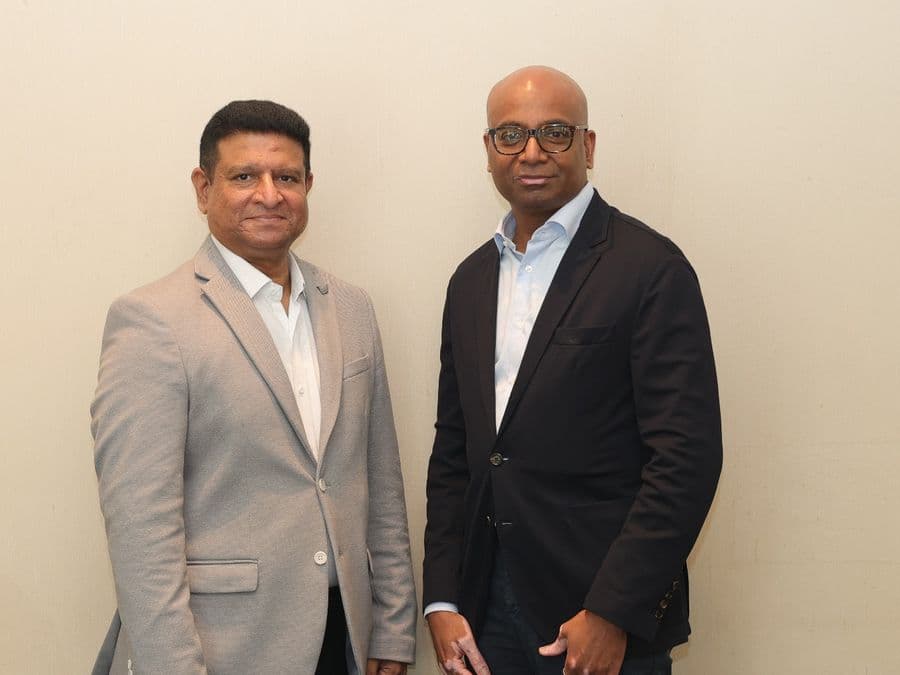
AdaniConneX, the data centre joint venture between the Adani Group and EdgeConneX, has partnered with DE-CIX India to set up a point of presence at its Chennai 1 facility in the SIPCOT region.
An unremarkable announcement about network plumbing, which happens to touch something Chennai has held for years without fully converting into advantage.
The subsea position
Chennai hosts several international subsea cable landing stations linking India to major global internet routes. On raw physical connectivity to the rest of the world, it is among the best-placed cities in the country.
Landing stations only bring traffic to the coastline, though. What decides whether that position becomes a real digital hub is what happens next — how efficiently networks can hand traffic to each other once it arrives.
An internet exchange fills that gap. This deployment is aimed squarely at it.
The change
Customers at Chennai 1 get direct access to DE-CIX India's internet exchange, reaching more than 600 networks: telecom operators, ISPs, content platforms and global cloud providers.
In practice, traffic between two networks inside the facility stops needing a round trip to Mumbai. Data gets exchanged closer to where it is consumed, cutting latency and reducing dependence on long-haul capacity.
AdaniConneX CEO Jeyakumar Janakaraj put the rationale plainly: "Building data centres is only part of the equation; they must also be seamlessly connected to the networks, cloud platforms and businesses that rely on them." DE-CIX India CBO Sudhir Kunder described it as extending the interconnection platform so enterprises, cloud providers and networks reach "a resilient and scalable ecosystem."
Both companies say they will explore expanding interconnection across additional campuses.
Why interconnection matters more now
Latency has always mattered for interactive services. AI inference sharpens the requirement, because inference is latency-sensitive in a way training is not, and inference is steadily becoming the bulk of production AI traffic.
Training can run wherever power is cheapest. Inference has to sit near the user. That pushes compute toward well-connected metropolitan facilities rather than remote power-advantaged sites, and turns interconnection density into a competitive variable between cities instead of a technical footnote.
For Tamil Nadu that is the part worth noticing. The state's data centre pitch has rested mostly on land, power and the subsea cable position. Interconnection decides whether workloads settle in Chennai or merely pass through on the way to Mumbai.
Keeping it in proportion
One PoP is not a transformation. Mumbai remains India's dominant interconnection hub by a wide margin, and closing that gap takes sustained deployment across many facilities and operators rather than a single partnership.
The direction is right and the reasoning holds. Chennai's subsea advantage has been underused for a long time, and infrastructure that makes traffic worth terminating locally is how that starts to change.
Source: AdaniConneX, DE-CIX India Strengthen Chennai's Role as a Digital Gateway