NVIDIA Turns Compute Into an Asset Class
NVIDIA has signed memorandums of understanding with Apollo, BlackRock, Blackstone, Brookfield, Goldman Sachs and KKR to set up independent compute financing platforms, aiming to mobilise more than $500 billion of third-party capital for AI infrastructure over time.
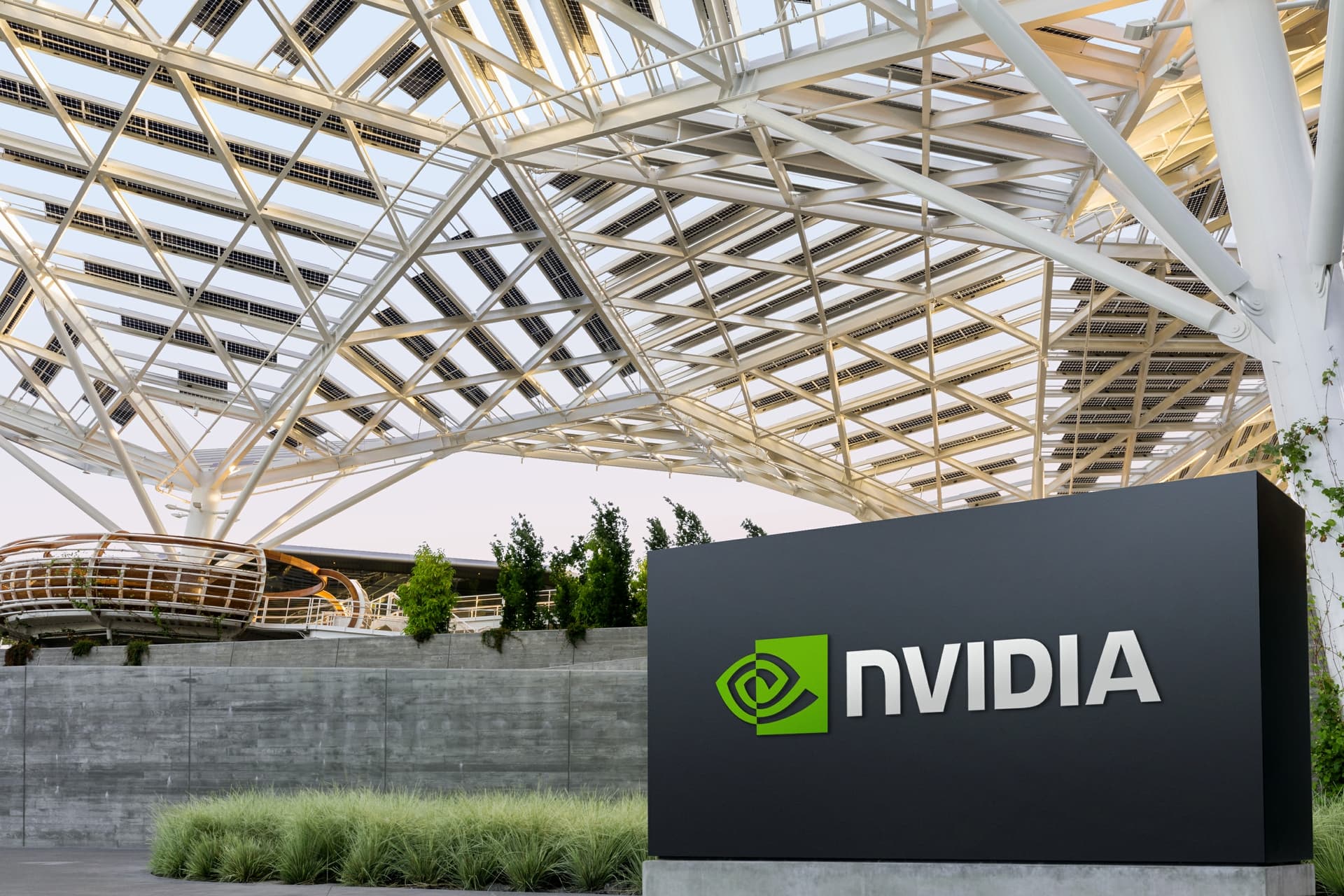
NVIDIA has signed memorandums of understanding with Apollo, BlackRock, Blackstone, Brookfield, Goldman Sachs and KKR to set up independent compute financing platforms, aiming to mobilise more than $500 billion of third-party capital for AI infrastructure over time.
Six of the world's largest asset managers, one announcement.
The structure
These are dedicated pools of capital at significant scale, offered at attractive rates to NVIDIA customers, funding AI infrastructure across NVIDIA's ecosystem — frontier AI labs, enterprises and AI clouds.
NVIDIA's framing is deliberate. The company calls its compute "an investable asset," citing lowest token cost, highest revenue, longest life, and an ecosystem of offtakers built on CUDA.
Jensen Huang: "We began by building chips; today, we are helping create a new class of productive, investable infrastructure: AI factories." And, more bluntly, "In AI, compute is revenue."
Why this is about financing rather than silicon
Manufacturing capacity stopped being the binding constraint on AI infrastructure a while ago. Balance sheets took over.
An AI factory carries the risk profile of a technology bet and the cost profile of a power station. Most organisations that want one cannot fund it from operating cash flow, and conventional lenders struggle to underwrite an asset whose residual value depends on what the compute market looks like in five years.
NVIDIA is proposing to make GPU compute legible to institutional capital the way real estate, toll roads and energy infrastructure already are. The tell is in the vocabulary: long-duration, usage-linked revenue. That is infrastructure finance language pointed at silicon.
What makes it financeable, and what does not
The argument rests on compute being "fungible and transferable across customers and operators." If an operator defaults, the GPUs redeploy to another tenant. Aircraft leasing works for the same reason — a plane is worth something to somebody else.
The argument NVIDIA does not make, and any investor should, is about depreciation. Aircraft hold value for decades. GPUs face a new compute generation roughly every two years, and an accelerator's useful life depends on what replaces it and how fast. NVIDIA's answer is that CUDA improvements extend useful life. True, and also a claim that the company controlling the software is conveniently placed to make.
There is circularity here too, worth naming rather than stepping around: NVIDIA benefits when capital is mobilised to buy NVIDIA hardware. Structuring the financing that funds demand for your own product is not improper. It is not neutral either.
The signal underneath
Whatever you make of the mechanics, six firms of that size building financing vehicles around one vendor's compute means they are pricing AI infrastructure as a durable, long-horizon asset class rather than a cyclical technology purchase.
For enterprises planning multi-year AI capacity, that widens the menu. Buying outright stops being the only route to dedicated compute, and the financing terms on offer may end up mattering as much as the hardware specifications.