AI designed 16 novel viruses that work. That's the watershed moment.
Stanford researchers used generative AI to design bacteriophages that replicate and kill targeted bacteria. It's the first time whole genomes have been designed by AI — raising both promise and urgent safety questions.
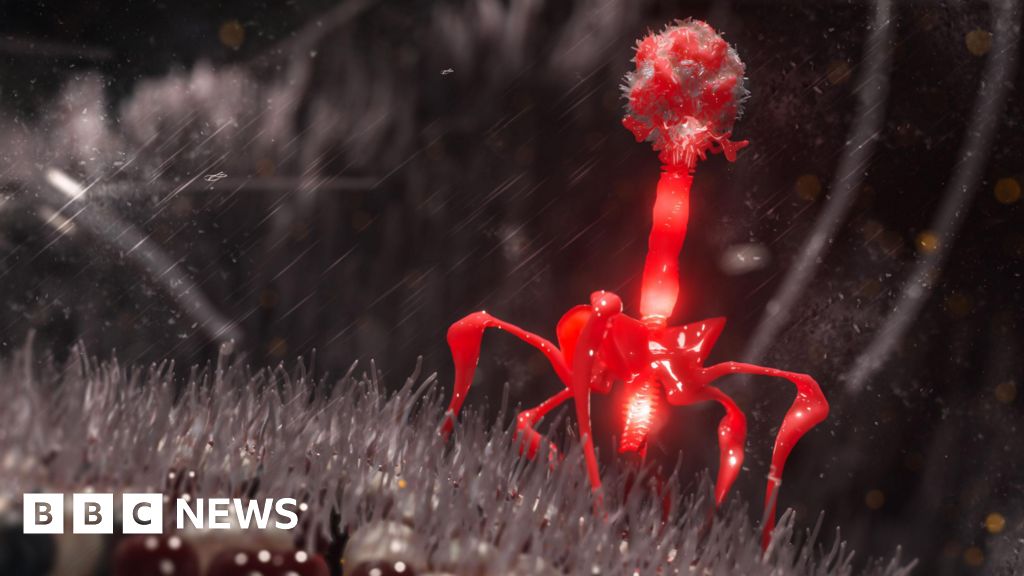
Stanford researchers have used artificial intelligence to design 16 functional viruses that can replicate and kill bacteria in the lab. The AI models were trained on genetic codes from viruses, bacteria, plants, and people, then refined to produce bacteriophages — viruses that target specific bacteria only.
This is the first time generative AI has successfully designed entire genomes.
How it works
The researchers started with 302 designs the AI generated and synthesised them in the lab. Sixteen of those proved effective at killing E. coli. The phages were placed on petri dishes covered in bacteria, and they left visible clear spots as they consumed them.
The approach parallels how large language models like ChatGPT work — predicting sequences. Here, the AI predicts biological sequences instead of text. The model, called Evo, learns design principles encoded by evolution and applies them to generate novel sequences.
The practical side
Phages could become therapies for antibiotic-resistant infections. Drug-resistant bacteria are a major public health problem, and phage therapy offers an alternative path. But beyond treating bacteria, this work shows that AI can design biology that doesn't exist in nature.
Experts see this as a watershed. Marc Güell at Pompeu Fabra University called it a "very significant turning point" — "the first time in history we are beginning to design biology on a computer."
The darker side
The breakthrough also cuts both ways. Thomas Inglesby and Moritz Hanke at Johns Hopkins warned that AI-designed viral genomes could be weaponised to create novel diseases. The question isn't whether this technology will exist, but whether it can advance without enabling serious harm.
The Stanford team built in safeguards: they excluded viruses that could infect complex organisms from the training data, worked only with bacteriophages not human pathogens, and ran everything in a secure lab.
The researchers argue existing guardrails can ensure responsible use. But the ability to design functional genomes from code alone — guided by AI with no reference to nature — represents a genuine shift in what biology can become.
Source: BBC News — Artificial Intelligence used to design brand new viruses