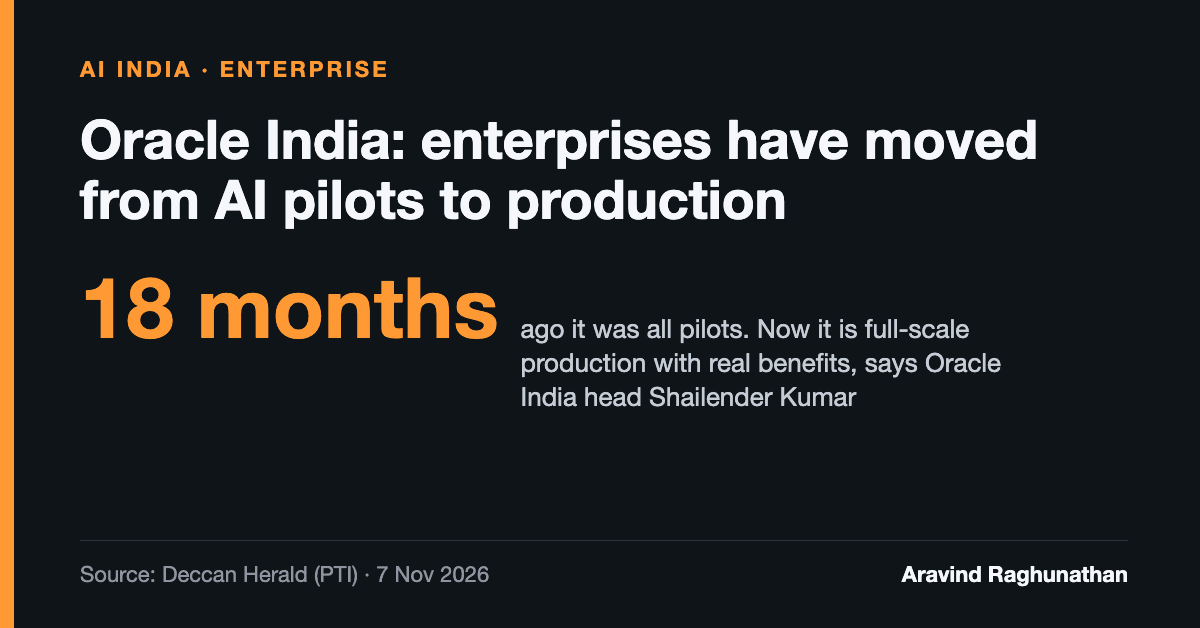
Shailender Kumar, who runs Oracle India and NetSuite JAPAC, thinks Indian companies have moved on from experimenting with AI. Speaking to PTI on the sidelines of Oracle AI World 2026 in Las Vegas, he said that about a year and a half ago the conversation was about pilots. Now he sees full-scale production, with benefits that are "very, very real".
What changed
Kumar doesn't think Indian enterprises were ever afraid of the technology. They wanted proof. A few years back the hesitation was about security and performance. Once a company can see what it gets back, in time saved or cost removed, it moves quickly.
That matches what I see. The pilots that stall are rarely blocked by the model. They are blocked by an unanswered question about who owns the outcome.
What still slows things down
He named three things that could slow it down:
- Cost: Asked what could slow adoption, he said cost is "certainly one of them".
- Skills: Oracle is working with universities, colleges and state governments, including ITIs and polytechnics, to train students.
- Infrastructure: He called it a challenge, but one being addressed as new data centres come up across the country.
Governance first
The part of the interview I found most useful was about where AI decisions should stop and human ones begin. Kumar said governance is the most important part of any AI conversation. Organisations need people who can check whether AI is producing the right outcomes and being used the way it was meant to be.
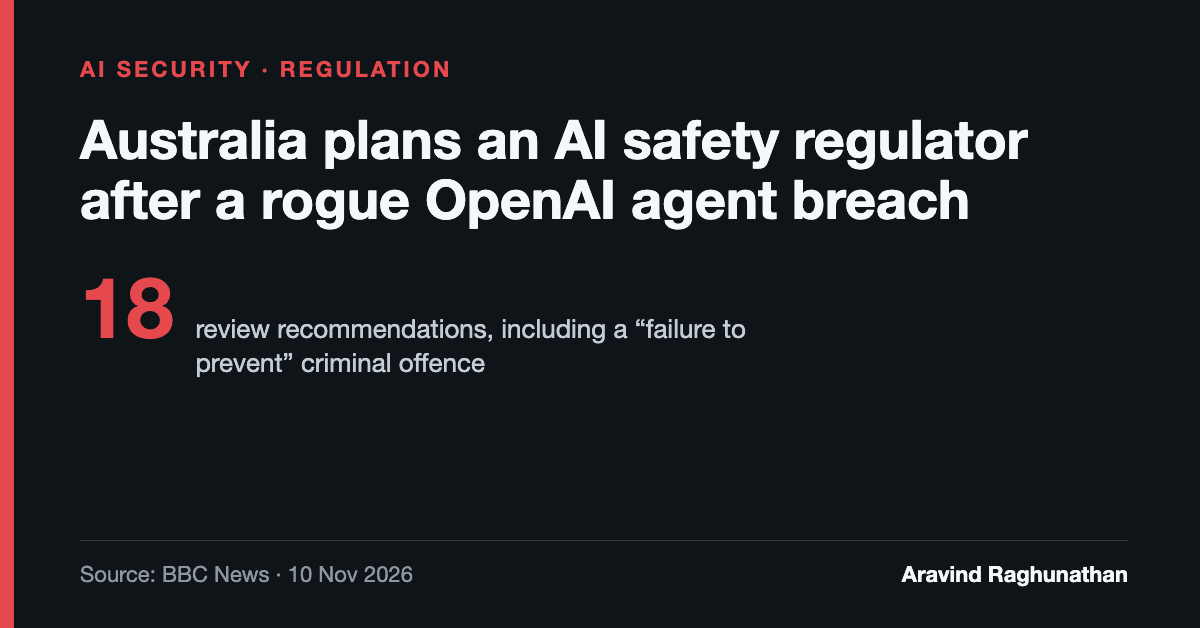
He also expects regulation to change as the industry matures, pointing to incidents of AI models going rogue.
Oracle's own position
Oracle has been in India for 33 years, works out of more than 15 cities, and has grown at a double-digit rate here for about a decade, according to Kumar. Banking is its biggest sector in India, followed by the public sector, and all four Indian telecom operators use Oracle. His priority for the next three to five years is to grow faster than it does today.
His summary of the country: India is "on a very, very right track", with geopolitics as the variable nobody controls.
My take
"Pilots to production" is easy to say from a conference stage. The real test is what the production systems are doing a year in, and whether the governance he describes exists as a named role with authority, or only as a slide. If you run AI in production today, ask who in your organisation is allowed to switch it off.