India's Next Engineers Are Sitting in Government Schools
A fourteen-year-old from a government school in East Godavari was picked for the world's first all-girls lunar CubeSat mission, from 12,000 applicants across 108 countries. How she was found says more about India's talent problem than the selection does.
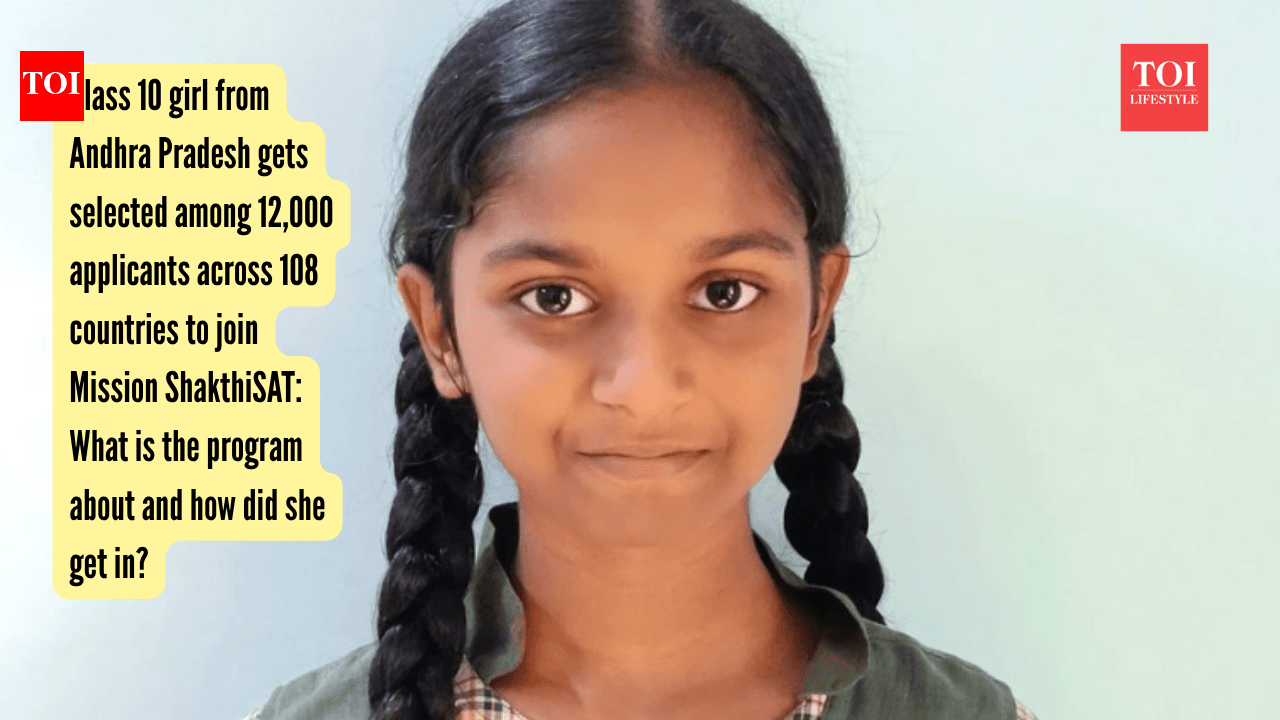
Kandula Jessie is fourteen, in Class 10 at Zilla Parishad Girls High School in Dowleswaram, East Godavari. Her father is a carpenter. Her mother runs the house. She was at a private school until money got tight, and the family moved her to a government one.
Last month she was selected for Mission ShakthiSAT, out of roughly 12,000 applicants across 108 countries. She is one of twenty Indian students on the list, and the only one from Andhra Pradesh.
What she got into
Mission ShakthiSAT is the world's first all-girls lunar CubeSat project, run by Space Kidz India under its founder and CEO, Dr Srimathy Kesan. The aim is to move girls into STEM careers through actual work on space science and satellite technology, rather than through encouragement alone.
Selection took more than an application form. Candidates worked through online coursework, sat a one-hour interview with scientists and programme coordinators, and submitted a one-minute video arguing why STEM education matters. The curriculum behind it runs to hundreds of modules covering satellite systems, space technology, thermodynamics and propulsion.
From 23 August, Jessie trains in New Delhi on satellite design, payload development and mission operations for a student-built lunar CubeSat. She will sit daily online sessions while preparing for her Class 10 board exams.
How she was found
She applied because a physical science teacher named Manimala, who also runs the school's Atal Tinkering Lab, noticed she was interested in science and told her to.
Jessie then talked eight more students from the same school into applying.
That sequence is the story. The pipeline here did not start at an IIT. It started with a tinkering lab in a government school in East Godavari and one teacher who was paying attention.
What it should change about how we talk about talent
Most conversations I have about scaling AI teams in India arrive at the same complaint. There isn't enough talent. The good people are already taken. Everyone is fishing in the same few hundred CVs.
Usually that is a search problem being described as a supply problem.
Nothing a corporate recruiting function does would have found Jessie. Not campus tiering, not referral networks, not any filter that rewards prior brand names — none of it reaches a fourteen-year-old in Dowleswaram. She surfaced because someone put equipment in a government school, and because an adult standing next to it understood what she was looking at.
Both are cheap next to what companies spend on talent acquisition. Neither appears anywhere in a hiring budget.
For a technology organisation in India, the practical form of this isn't a sponsorship line in the CSR report. It's narrower: which schools near your engineering centres have tinkering labs, and has anyone from your team ever gone and stood in one. Equipment without someone who knows what to do with it is where a Manimala makes the difference, and that is a gap a working engineer can close with a few hours a month.
The caveat
One student getting selected fixes nothing structural, and reading this as proof the system works would be a mistake. If anything it shows the reverse — it took an unusual teacher and a fair amount of luck for a strong candidate to be noticed at all. The number nobody has is how many students just as capable, in schools just like hers, were never told to apply.
What it does prove is that the capability is sitting there. Worth knowing, before the next conversation about talent shortages.